Choosing your claim
How to Choose a Value Proposition: Lead With the Link a Rival Can't Copy
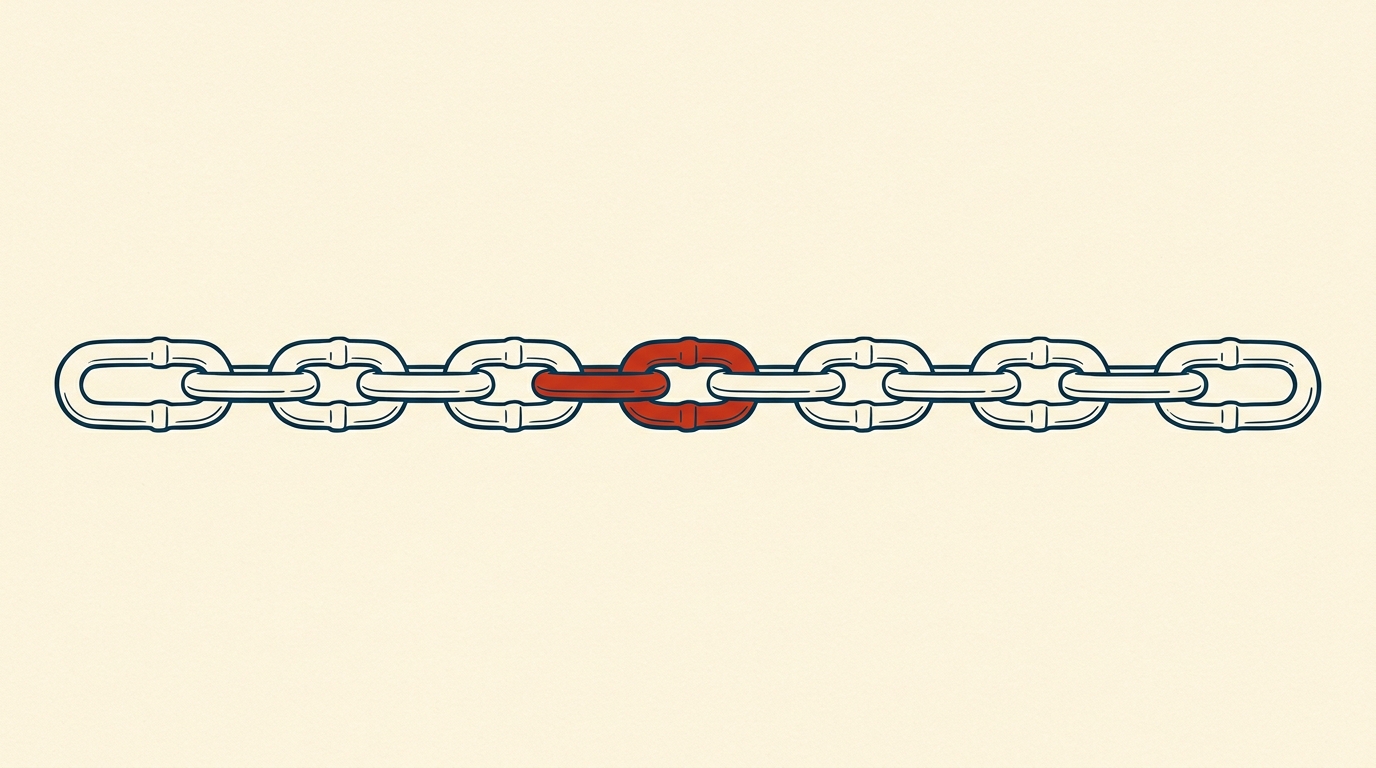
Behind every one-line promise sits a chain of cause and effect, and the line worth leading with is the one your operating records can back.
By Ines Calloway · October 14, 2026 · 7 min read
Several candidate lines on the whiteboard, and a launch date coming. The way to choose a value proposition is to pick the line you can prove from how your business runs, one a competitor couldn't put on their own site next week. Then write it.
Most guides teach you to write one statement from your customers' pain points. That's a sound start, and it gets you a clean sentence fast. What it skips is the choice between candidates, and the check on whether a rival already says the same thing or could start saying it. The six steps below cover both.
A value proposition is an exchange: this, for that
Before you write a word, name the trade. The buyer hands over money, and usually some time and risk as well: the hours spent switching, the chance the new supplier lets them down. In return they get something they couldn't easily get on their own.
A value proposition is the case for that exchange, and a good one makes the trade as convincing as it can be. If you're asking how to determine your value proposition, start here. Write down what your buyer gives, then what they get. If you can't fill in both halves in plain words, better wording won't rescue the line.
The one-liner sits on top of a chain of cause and effect
One sentence can't carry the whole case. Underneath it sits a chain, and it pays to write the chain out in full:
This lets you do A. That directly produces B, which in turn leads to C. The price is D.
A is what the buyer can now do. B is the direct result. C is the end state they care about, the reason anyone signs. D is the full price, counting time and risk alongside money.
Here is the chain filled in for an illustration. Say a firm services refrigeration equipment for food distributors. The firm is invented, and so is every detail that follows.
- A: its technicians catch failing compressors before they stop.
- B: fewer loads spoil in the truck or the warehouse.
- C: the distributor keeps its grocery contracts, which are hard to win back once a delivery arrives spoiled.
- D: a monthly service fee, plus site access for scheduled visits.
Write each link in the words your buyer would use. If a link needs jargon to make sense, the buyer won't follow it either.
Every promise gets judged against what the buyer could do instead
The buyer always has an alternative. Call it X. Usually that's a competitor or the way they handle the problem today. Sometimes it's doing nothing at all.
Write that side of the chain too. X costs something, which is Y. X also promises the same result, B, and falls short of it for a reason you can name. That reason is Z.
For the refrigeration firm, X is calling a repair company when something breaks. Y is the emergency call-out rate plus the stock already lost. Z is timing: the repair company also promises equipment that keeps running, and it arrives after the compressor has failed, when the load is already warm.
Which link you lead with depends on the market
Now decide which part of the chain goes up front. Look at how badly buyers need what you sell, and where your price sits against their other options. Then ask who takes the blame if the purchase goes wrong.
A rough guide:
- When the price is high, or the blame for a bad choice lands on a named person, lead with risk avoidance: the X, Y and Z side of the chain.
- When the need is strong and obvious and the price is moderate, lead with utility: A and B.
- When the need is weak or optional, or you charge a premium, lead with the end state, C.
These are tendencies, and reading a market is a judgment call. Firms selling into the same market can weigh it differently and still be right.
The textbook risk-avoidance lead is a saying from the computer industry: "No one ever got fired for buying IBM equipment." The earliest print use that Barry Popik's research into the phrase cites is from 1978, in Mini-micro Systems. It was a saying in the trade about the safe choice, and there's no evidence IBM used it in its own advertising.
It fit its market exactly. Mainframes cost a great deal, and the person who picked the supplier owned the outcome. The line skips A, B and C entirely and goes straight to the other side of the chain: choose anyone else, and the risk is yours.
To see why, try the same offer led two other ways. Both lines below are invented for comparison; nobody ran them.
- Utility (A, B): "Run the whole payroll overnight, on one machine."
- Aspiration (C): "A company that knows its own numbers by morning."
Both are reasonable lines. Neither touches the buyer's real worry, which was the career cost of a failed purchase.
Every link has to be provable, or the chain is a slogan
This is the step most value propositions skip. Writing in Harvard Business Review, James C. Anderson, James A. Narus and Wouter van Rossum describe most value propositions as ones that "make claims of savings and benefits to the customer without backing them up." The strongest, they argue, make offerings "superior on the few elements that matter most to target customers, demonstrating and documenting the value of this superior performance."
So go link by link, whichever one you plan to lead with. Each needs operating evidence: records from how you run that a buyer could check. For the refrigeration firm, A needs service logs showing faults caught before failure. B needs the distributor's spoilage records from before and after. Z is the easiest to show, because a repair call starts after the breakdown by definition.
Then read the whole chain and ask whether a competitor could write it word for word next week. Any preventive maintenance firm could claim the refrigeration chain above. As written, it's a slogan, so go back to the chain and look for a link only you can prove. Perhaps the firm's technicians are the only ones in the region certified on the compressors its customers run. The detail is made up for the illustration. It's the kind of fact a rival can't match by editing a homepage.
That's also how to write a unique value proposition. A line is unique when the evidence behind it belongs to you alone, which is why a copy test on your messaging is worth running before you commit. Check the other direction too. If a competitor already leads with your promise, that may be a sign it's time to reposition.
Seven parts can still make one argument
The strongest objection comes from the same HBR research. Anderson, Narus and van Rossum warn against the all-benefits approach, where a supplier lists every benefit its offering might deliver. A chain with A, B, C, D, X, Y and Z looks like exactly that.
The warning is fair. Put all seven parts on one slide and you'd have a benefits list.
The difference is in how the parts connect. A benefits list is a set of separate promises, and any of them could be dropped without the others noticing. The chain is one line of cause and effect, where each link exists because of the one before it. And you lead with a single link. The rest waits for the moment a buyer asks why.
The authors' own remedy points the same way. They want suppliers to win on the few elements that matter most to the customer, and picking your lead link by market is that choice made deliberately.
The finished line is the exchange, led by the link you can prove
Once every link holds up, fold the chain back down. The one-liner states the exchange and leads with the link you chose. Food distributors need working refrigeration badly, and a service contract is a moderate cost, so the refrigeration firm would lead with utility. The certification from the last step goes into the line, because it's the part a rival can't copy: "Fewer spoiled loads, from the region's only technicians certified on your compressors, for a fixed monthly fee."
The full chain is the expansion. It belongs on the sales page and in the pitch, and it's your answer when a buyer asks why they should believe the one-liner.
So what does a good example of a value proposition look like? A short line that states the exchange plainly, with every link behind it still standing after a buyer pushes on it.
If you're weighing candidate lines and want a second read on which one your evidence can carry, we're glad to talk through what it means for your brand.
A rival can copy your sentence in an afternoon. Copying the proof under it is a much slower job.
Frequently asked questions
- How do you choose a value proposition when you have several candidates?
- Pick the line you can prove from how your business runs, and that a competitor couldn't put on their own site next week. Write out the full chain of cause and effect behind each candidate, check that every link has operating evidence behind it, and lead with the link that fits your market.
- How do I determine my value proposition?
- Start by naming the exchange: what the buyer gives, including money, time and risk, and what they get in return. Then write out what your offer lets them do, the direct result, the end state they care about and the full price. If you can't fill in both sides of the trade in plain words, better wording won't fix the line.
- How do you write a unique value proposition?
- A value proposition is unique when the evidence behind it belongs to you alone. Read your full chain and ask whether a competitor could write it word for word next week. If they could, it's a slogan, so look for a link only you can prove, such as a capability a rival can't match by editing a homepage.
- Which part of a value proposition should you lead with?
- It depends on the market. When the price is high or a named person carries the blame for a bad choice, lead with risk avoidance. When the need is strong and the price moderate, lead with what the buyer can now do and its direct result, and when the need is optional or the price is premium, lead with the end state.
- Isn't a detailed value proposition just a list of benefits?
- Harvard Business Review research by Anderson, Narus and van Rossum warns against the all-benefits approach, where a supplier lists every benefit it might deliver. A chain of cause and effect is different because each link exists because of the one before it, and you lead with a single link. The rest is there for when a buyer asks why.
Sources
- Customer Value Propositions in Business Markets — Harvard Business Review, March 2006
- No one ever got fired for buying IBM (Microsoft, Gold...) — Barry Popik, The Big Apple